Residential concrete services
Concrete driveways
At Page Concrete and Outdoor Services, we install custom concrete driveways built to last. Strong, low-maintenance, and long-lasting, concrete is the smart choice for residential or commercial properties. Our expert team delivers precise installations that add lasting value and curb appeal—whether you need a new driveway or an extension, we get it done right the first time.
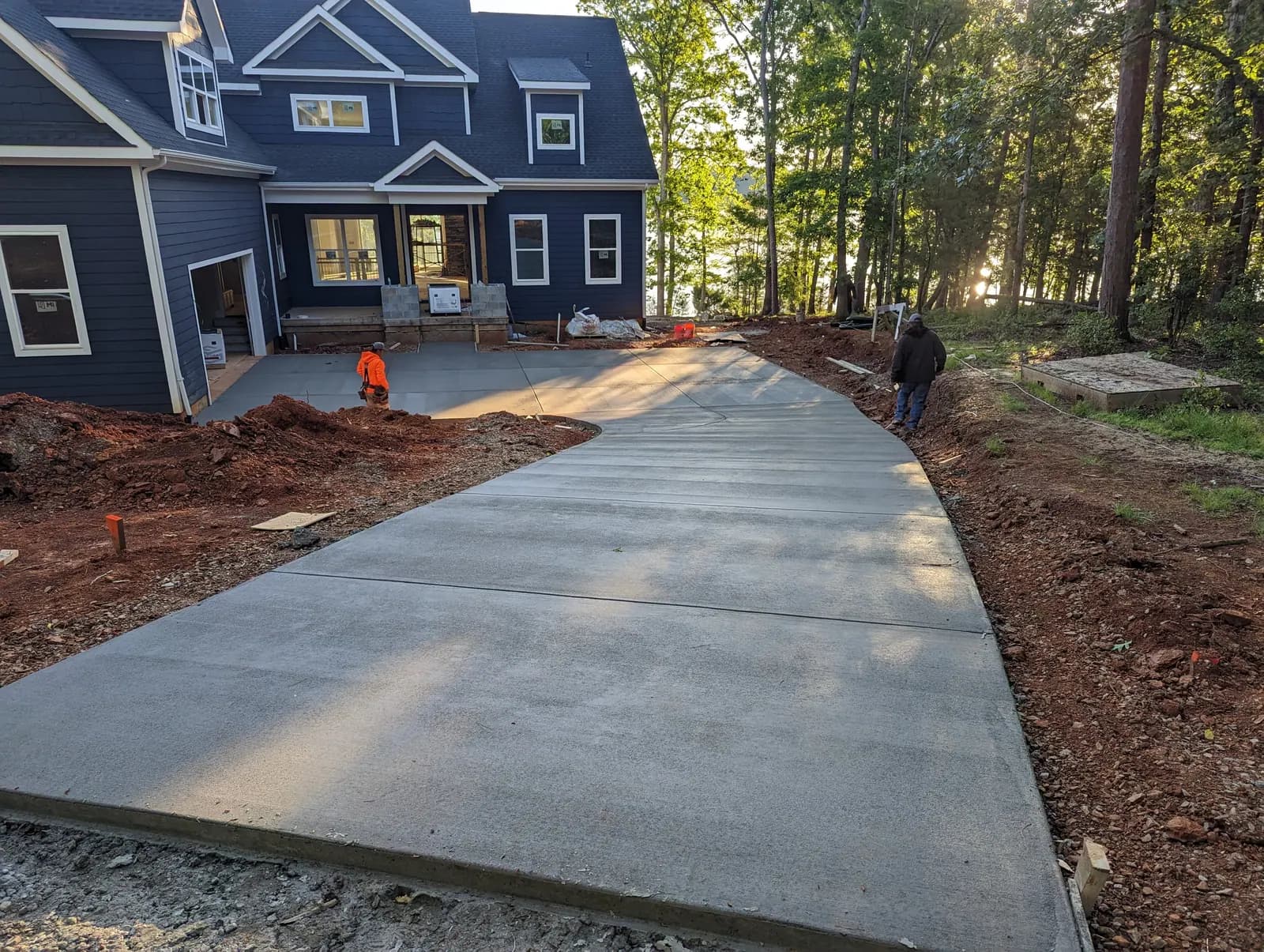
Driveways / Completed Page Concrete Work
What is included
Built to the right standard for the job.
- Mix
- 4000 PSI fiber-mesh, every residential pour
- Thickness
- 4" standard · thicker available for heavy vehicles
- Walk on it
- about 3 days
- Drive on it
- about 7 days
- Finish
- Broom finish standard · stamped borders available
Optional: densifier treatment
For an add-on cost, we can treat the surface with a penetrating densifier that helps reduce porosity, increase surface hardness and abrasion resistance, and seal out contaminants. It is most useful on driveways and high-traffic flatwork; always your call.
View Densifier Information SheetCompleted work
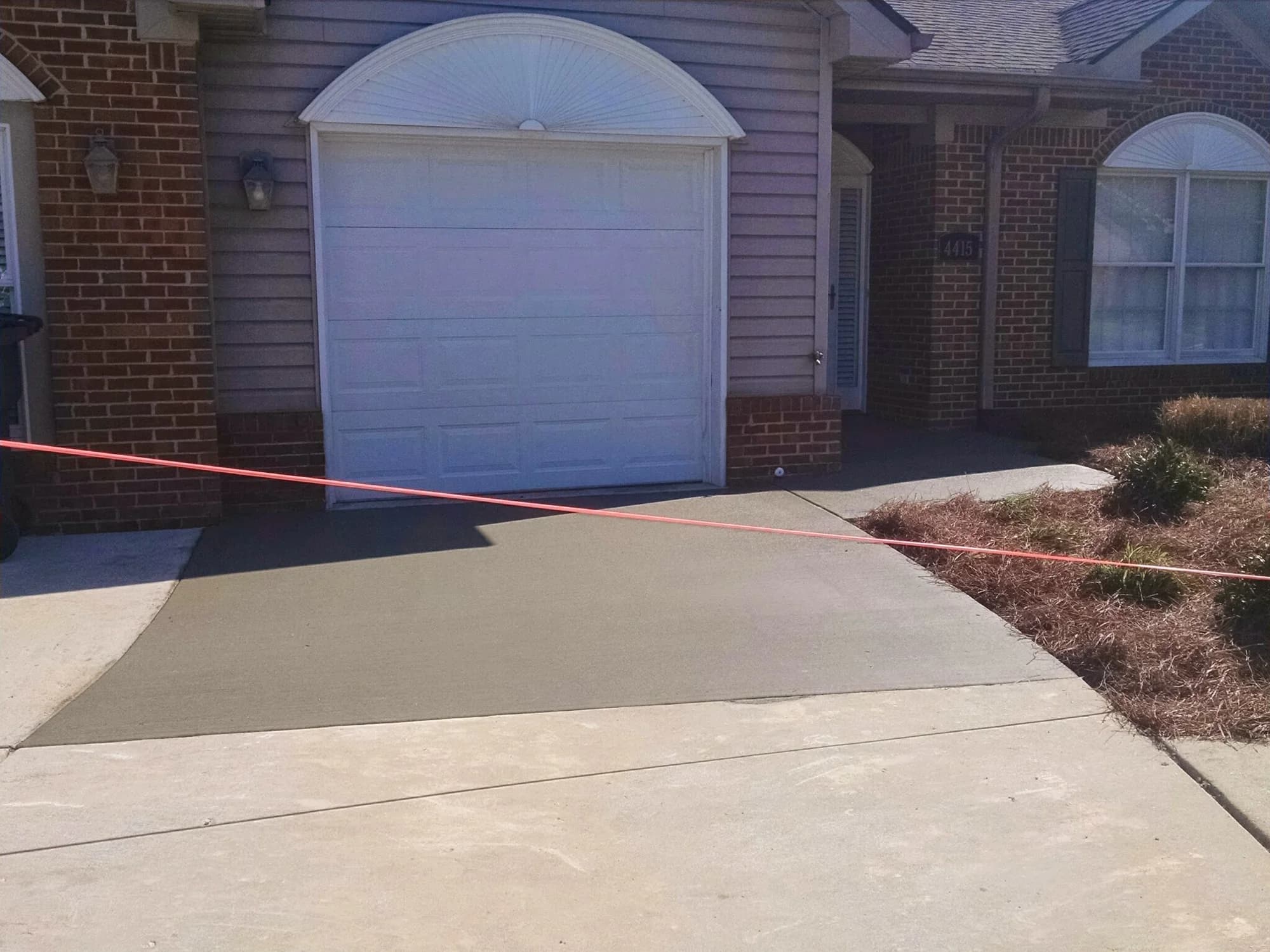
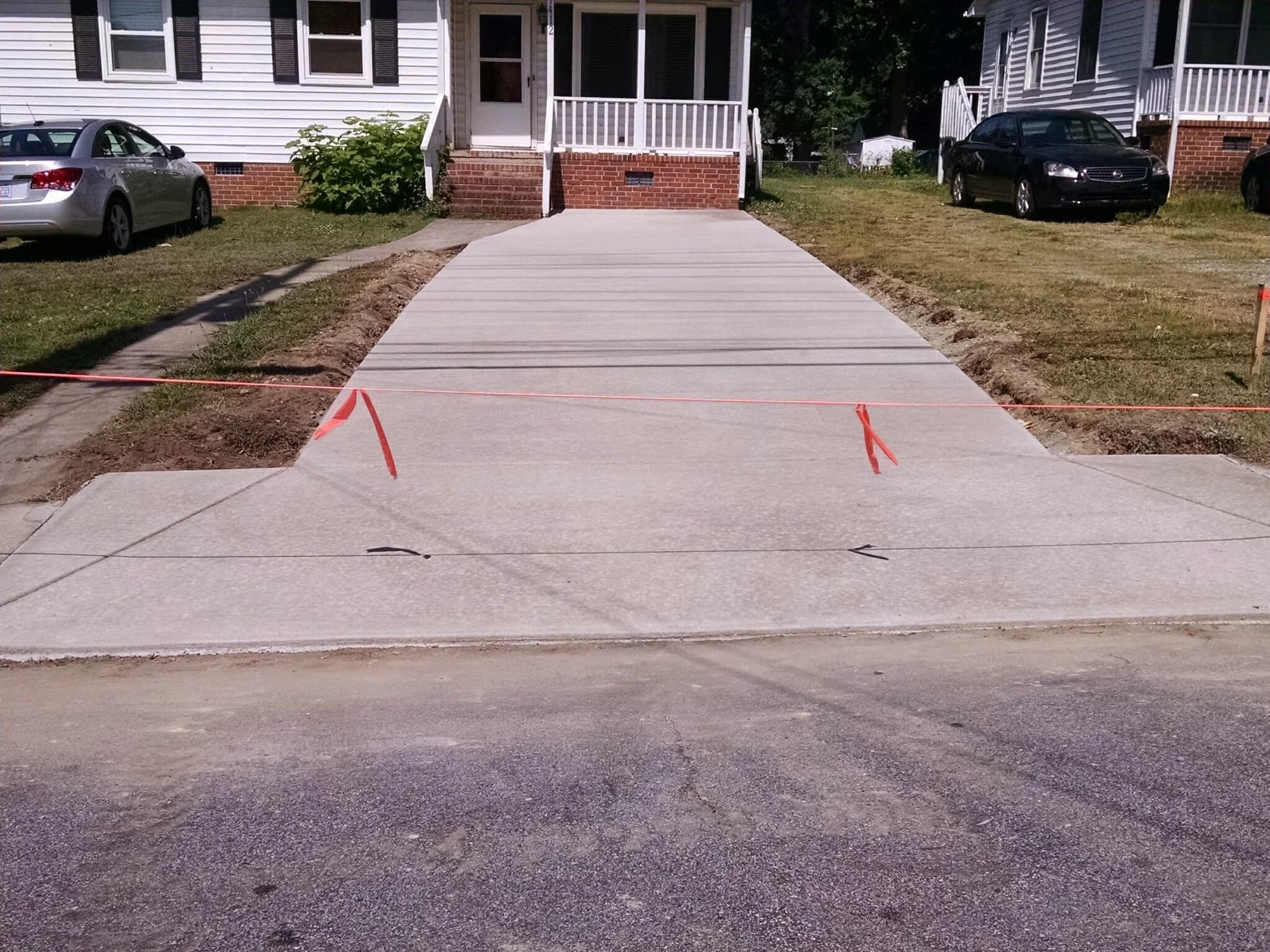
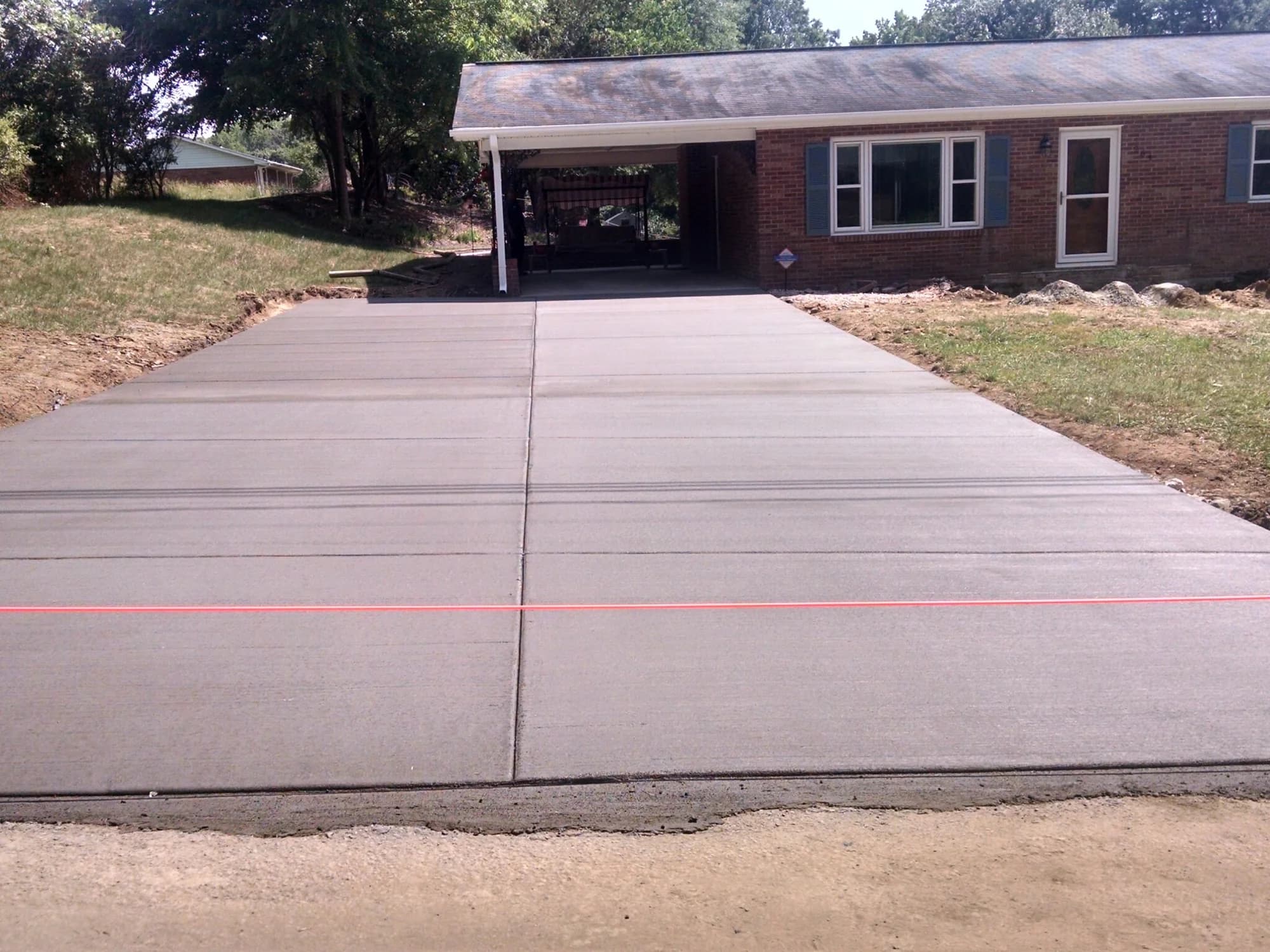
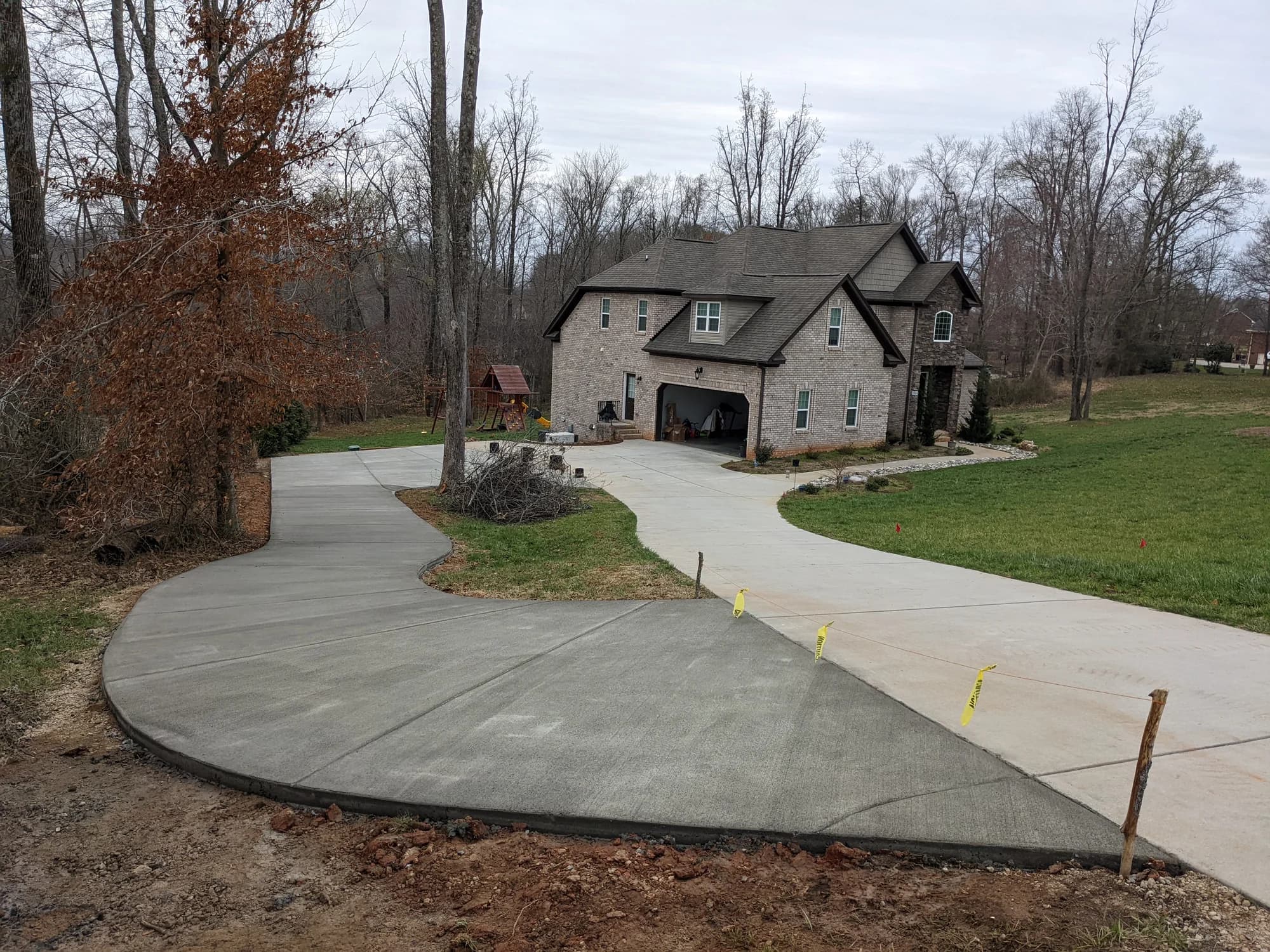
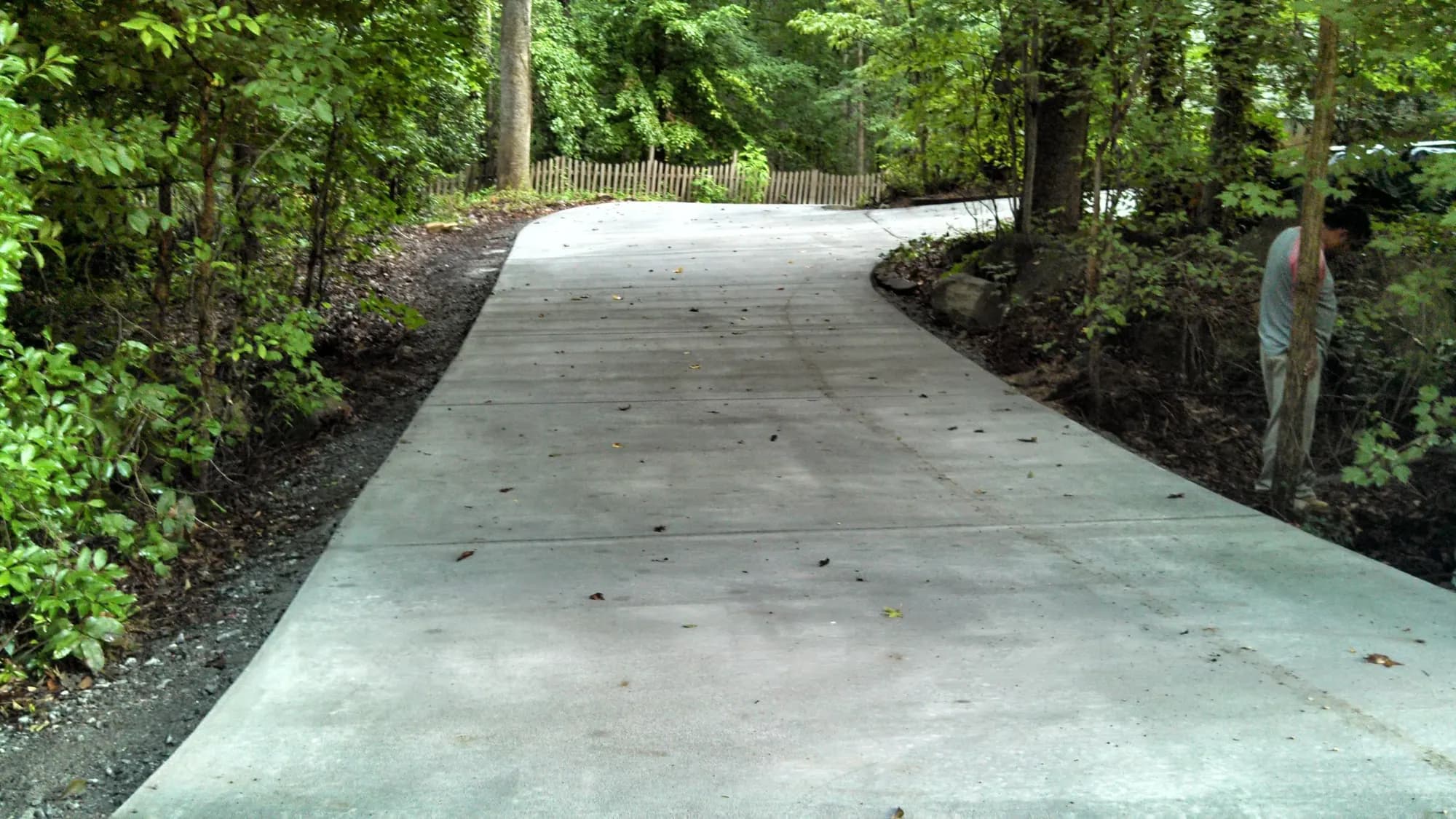
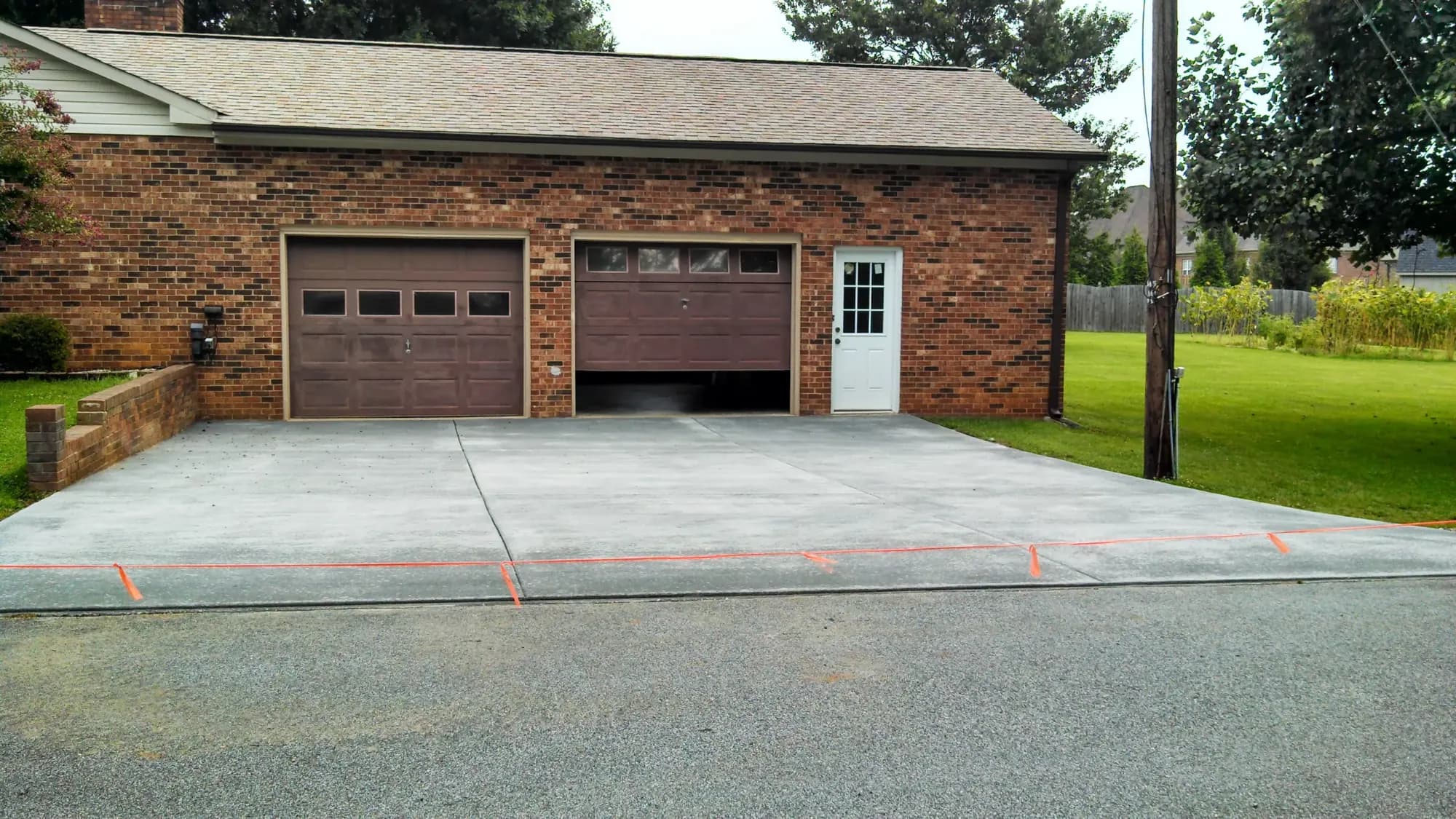
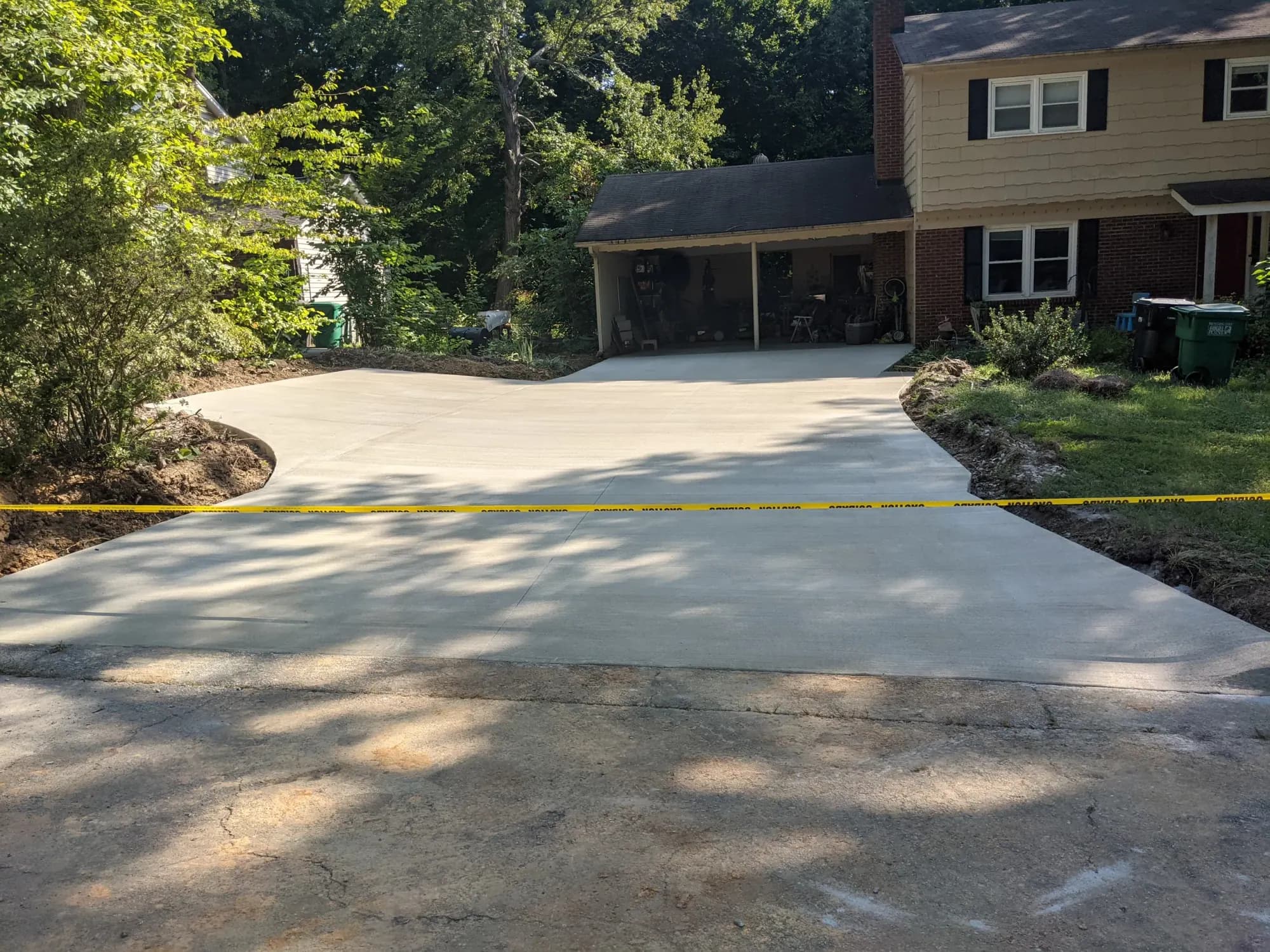
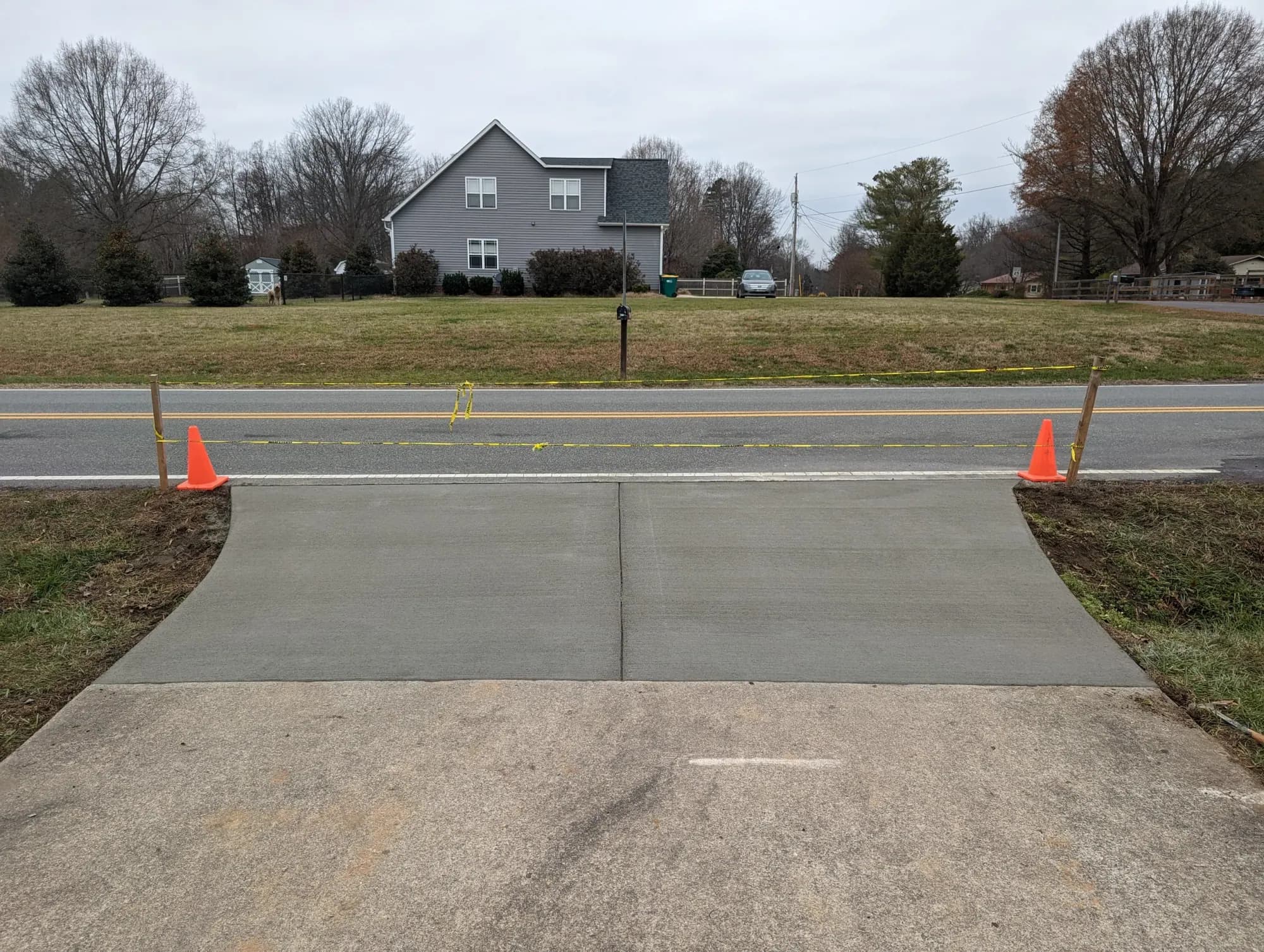
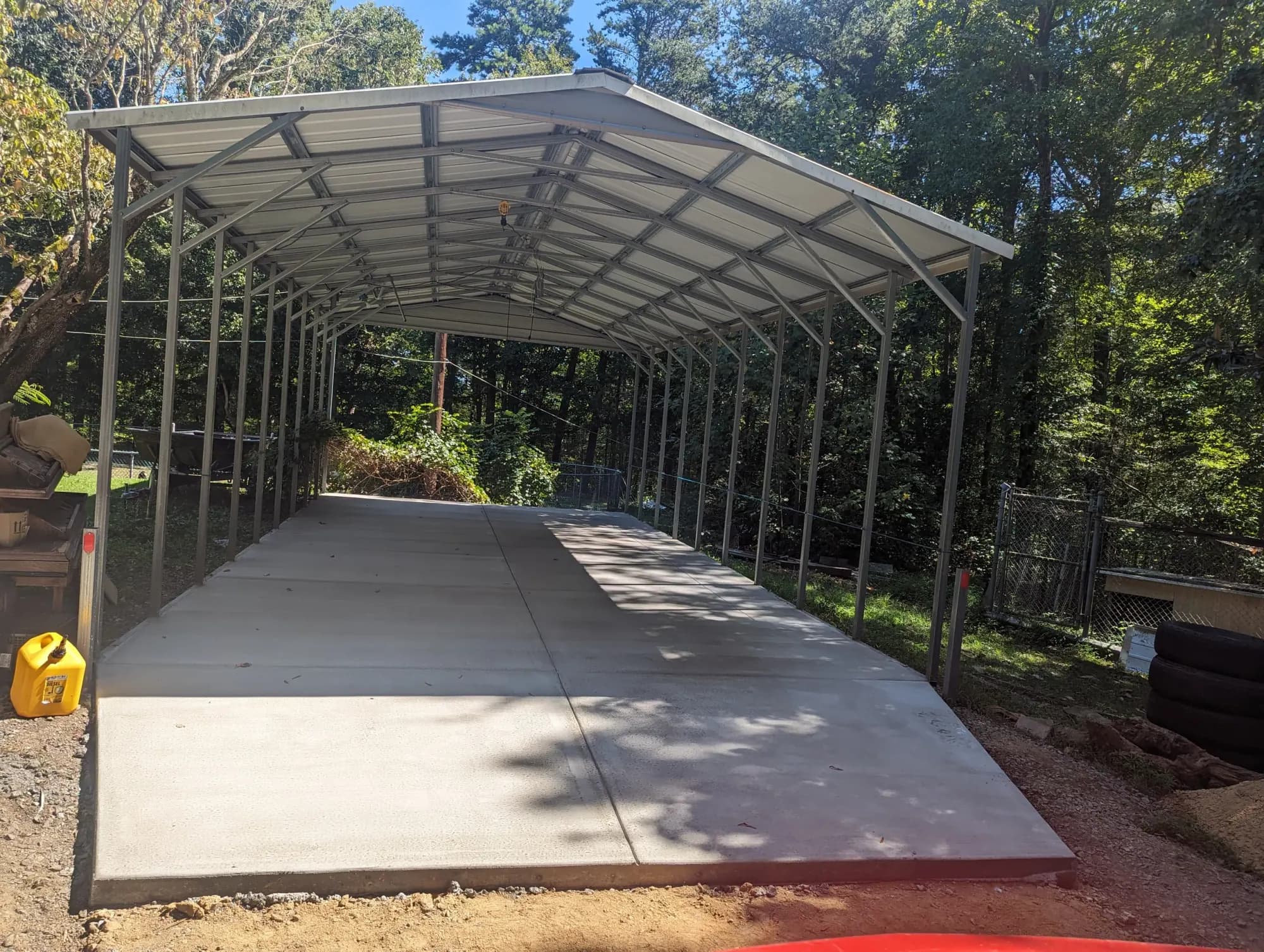
Completed driveways.
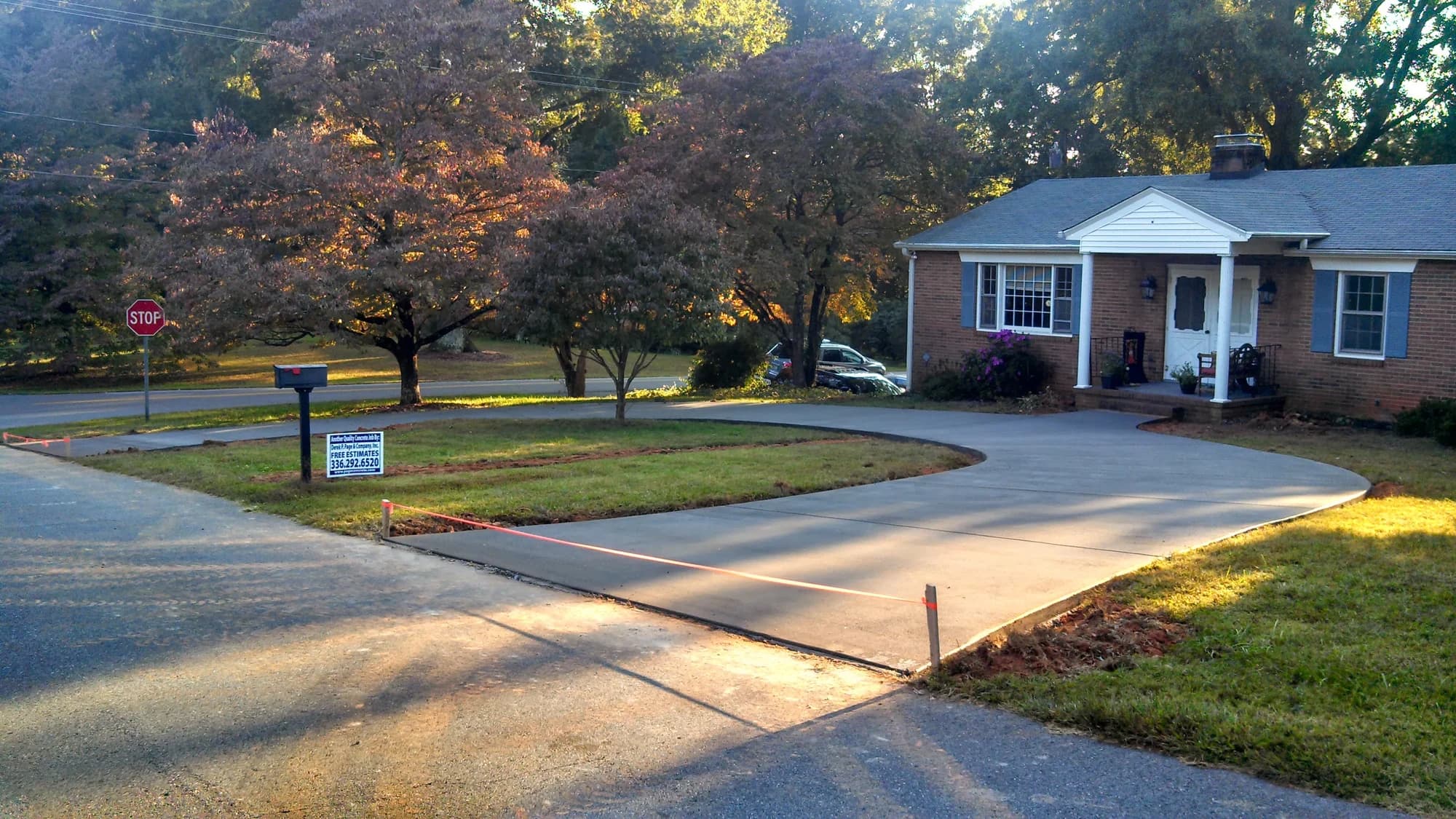
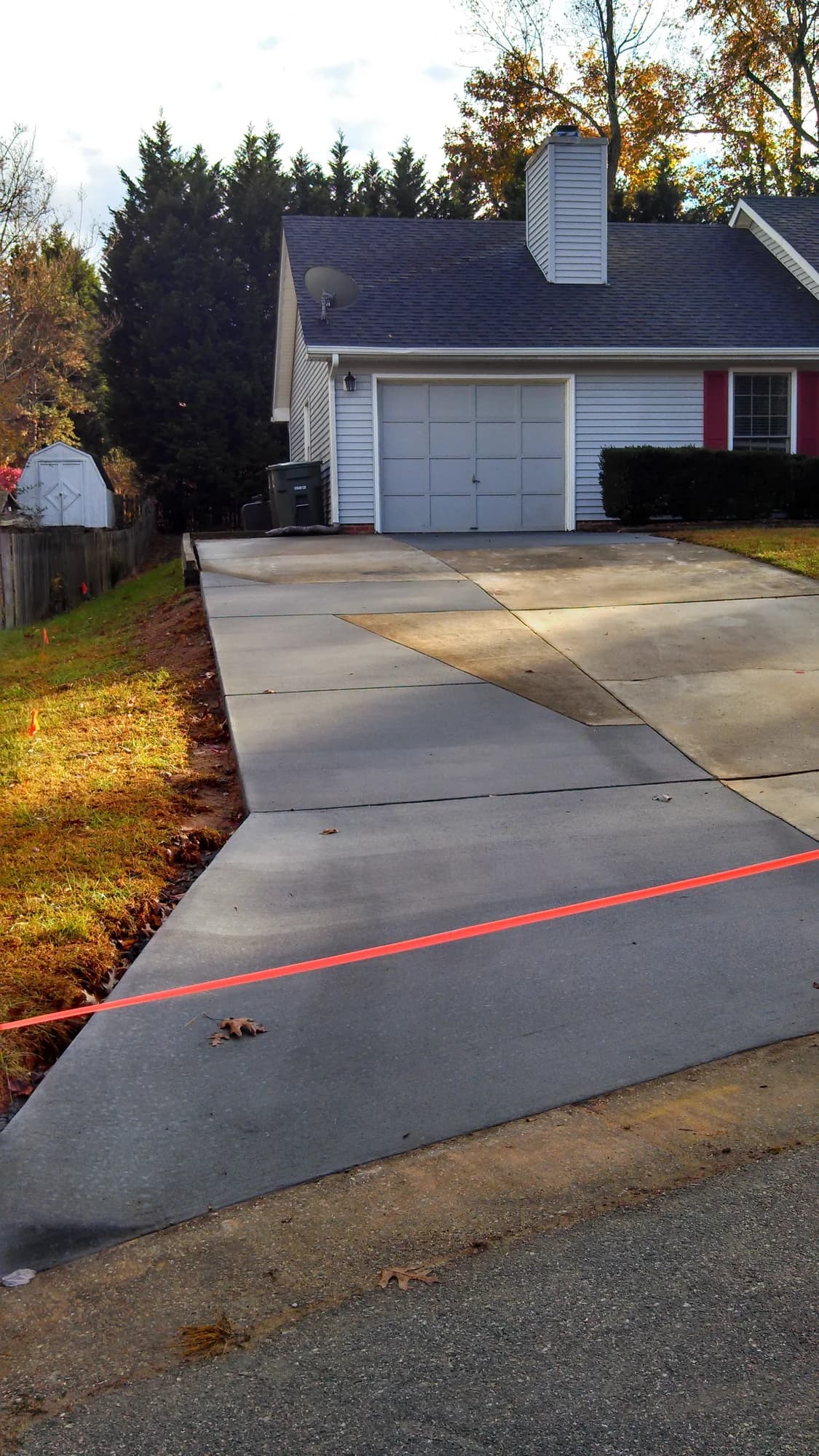
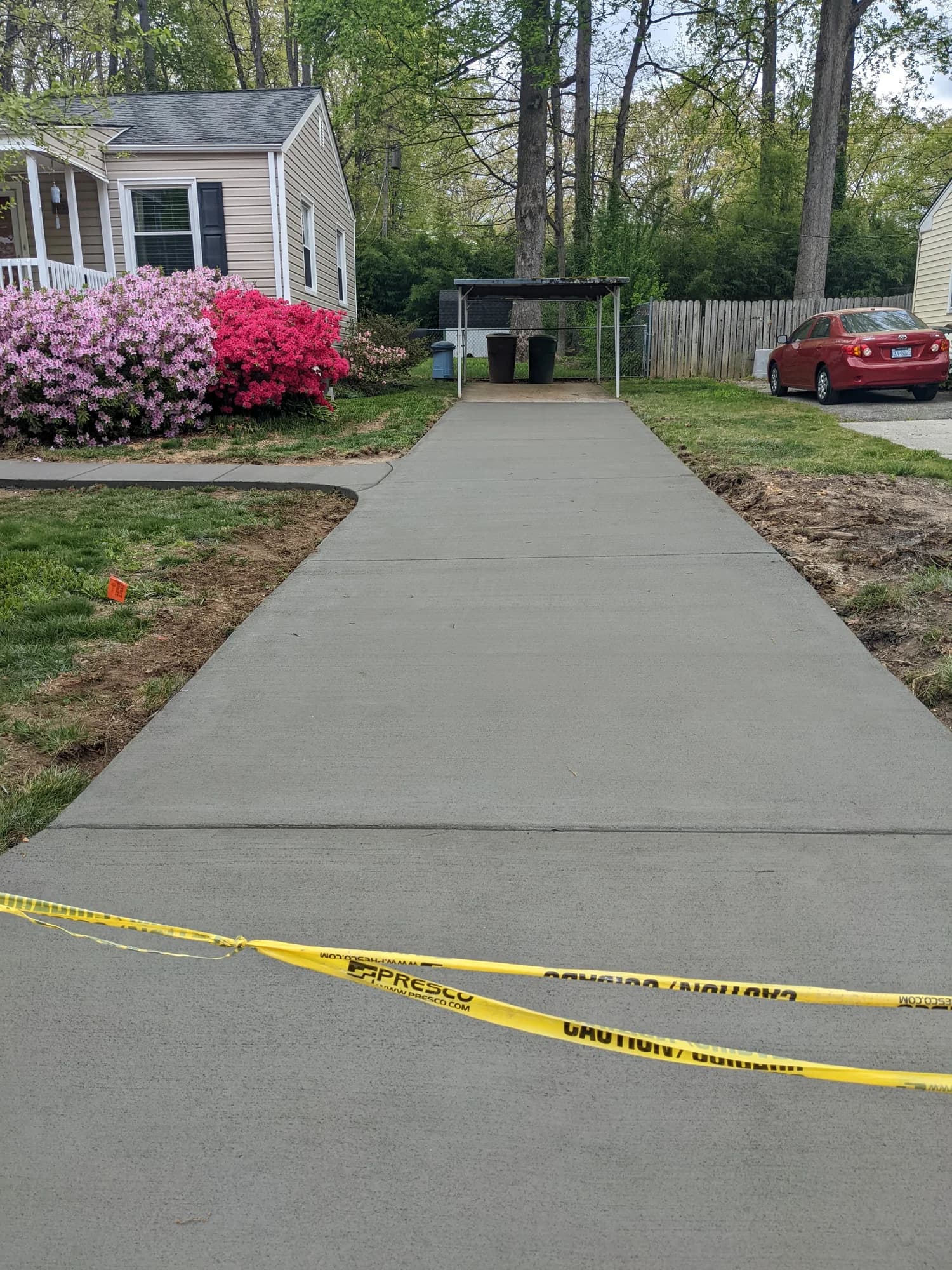
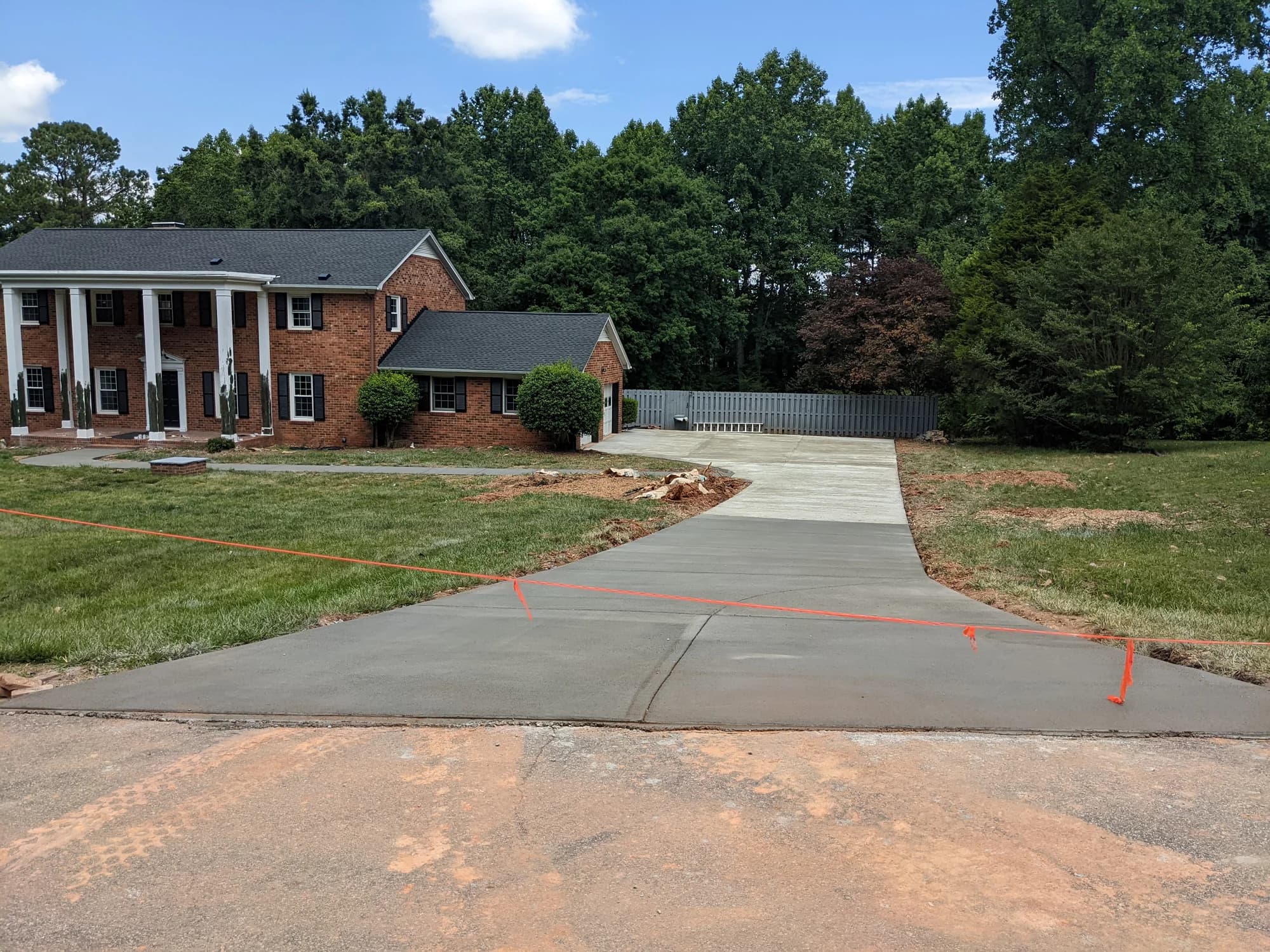
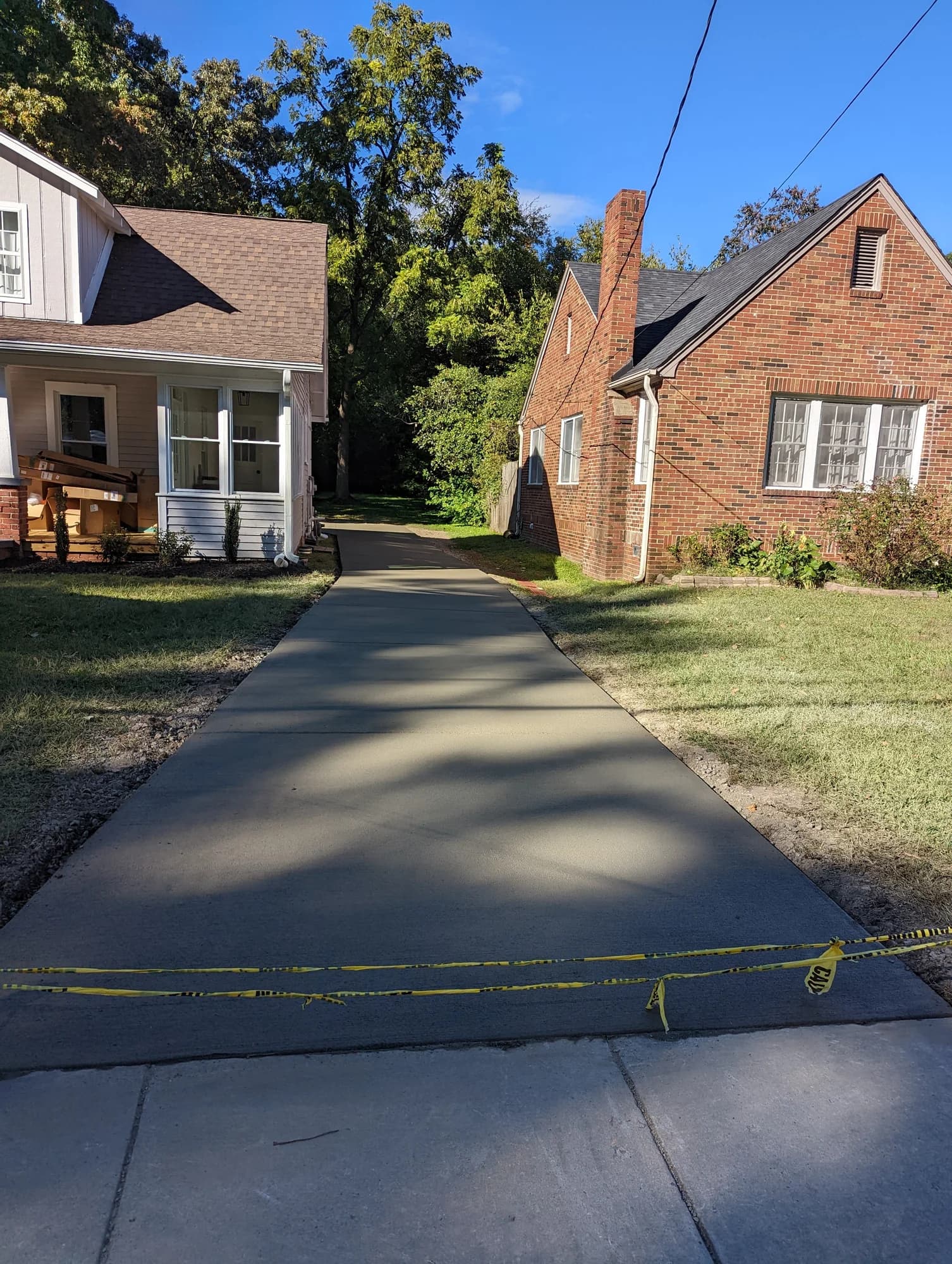
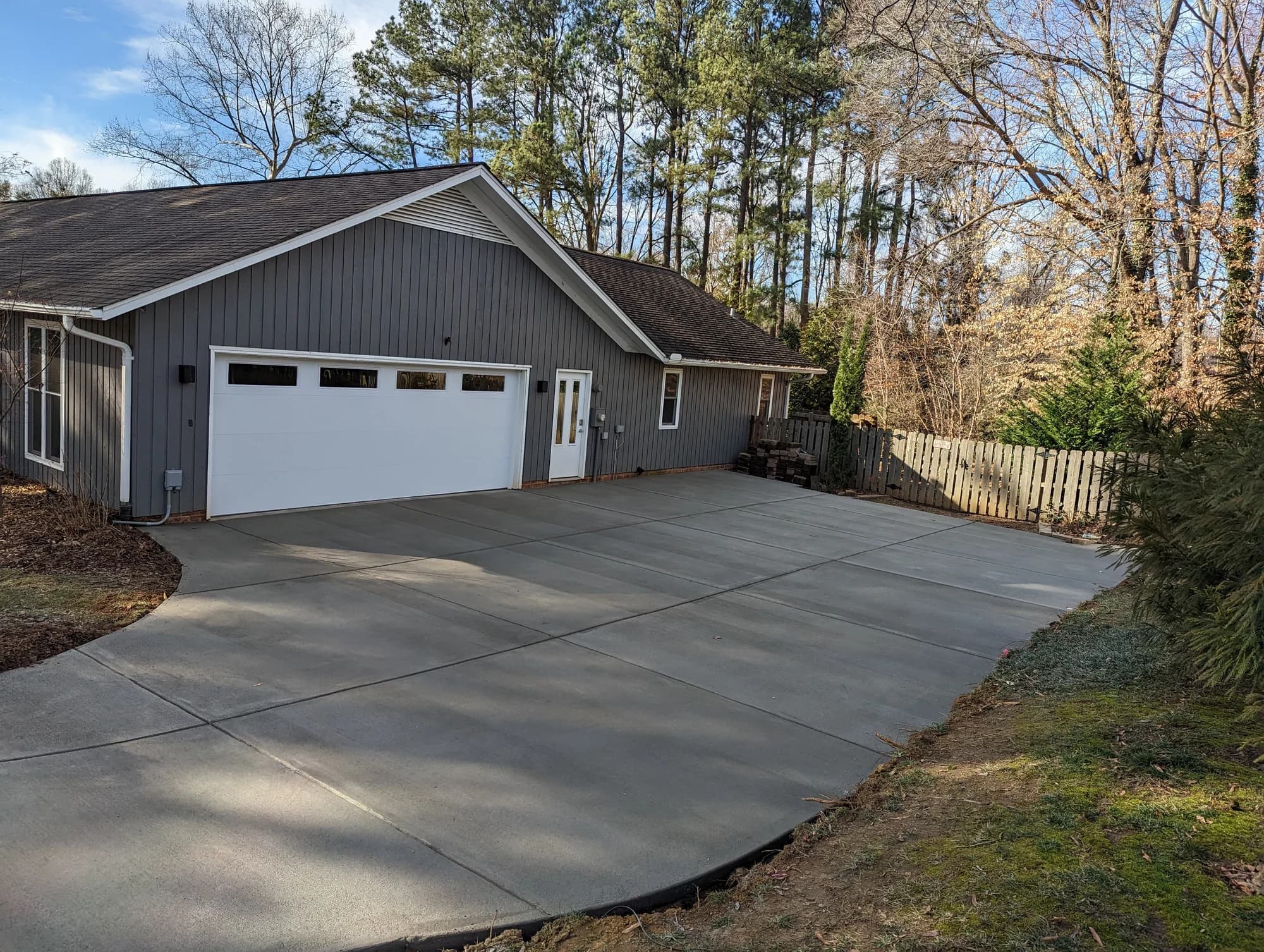
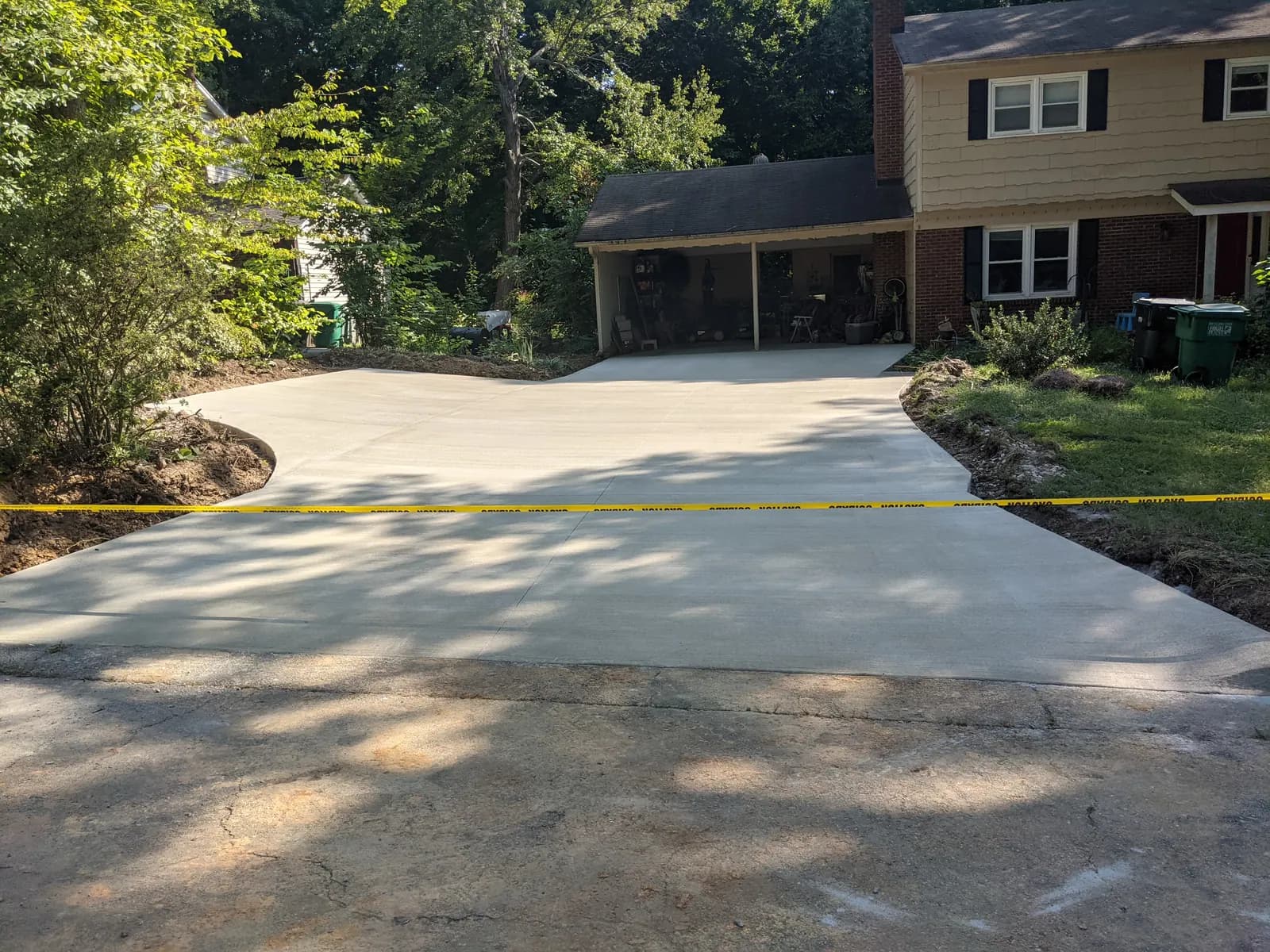
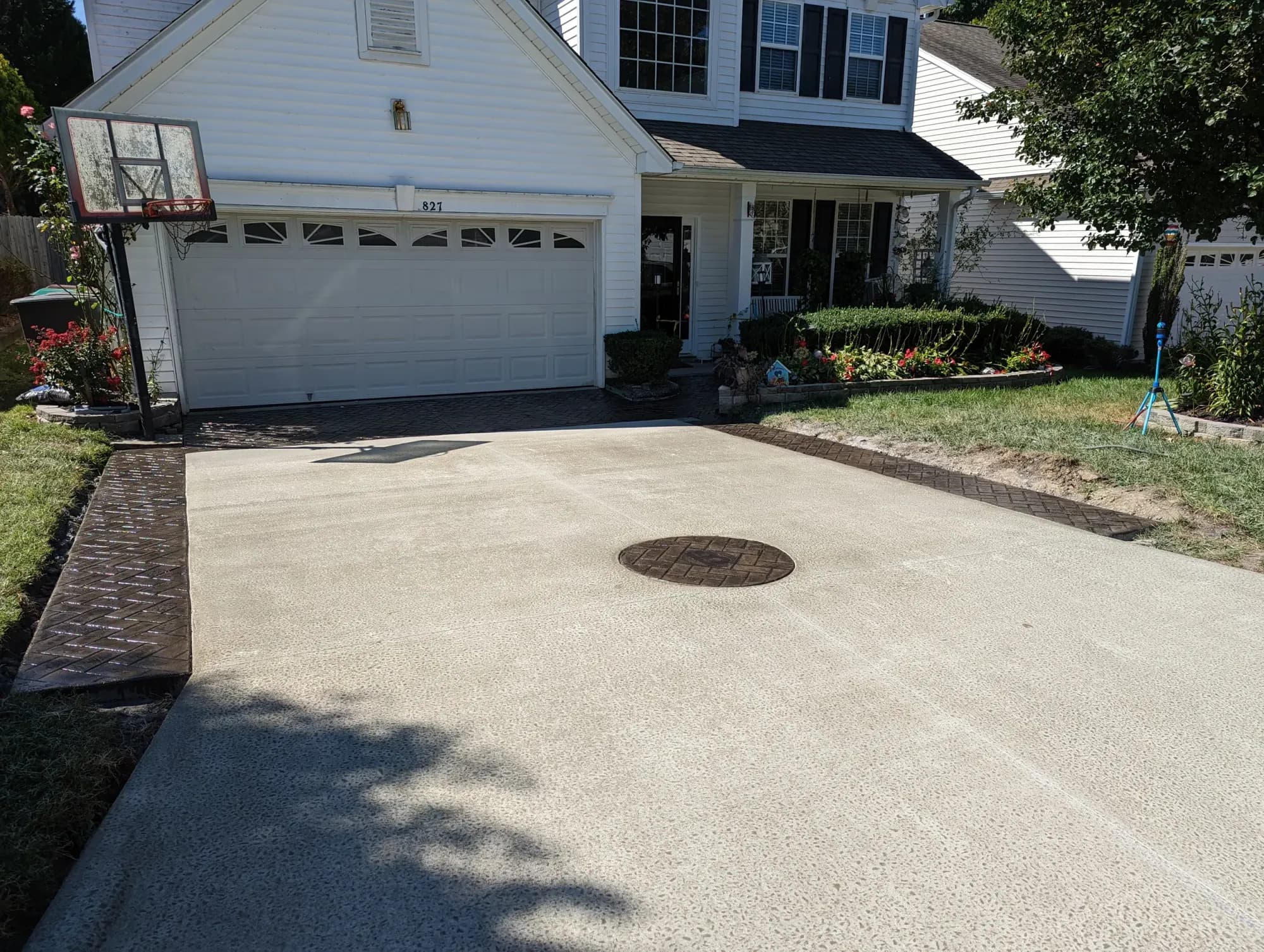
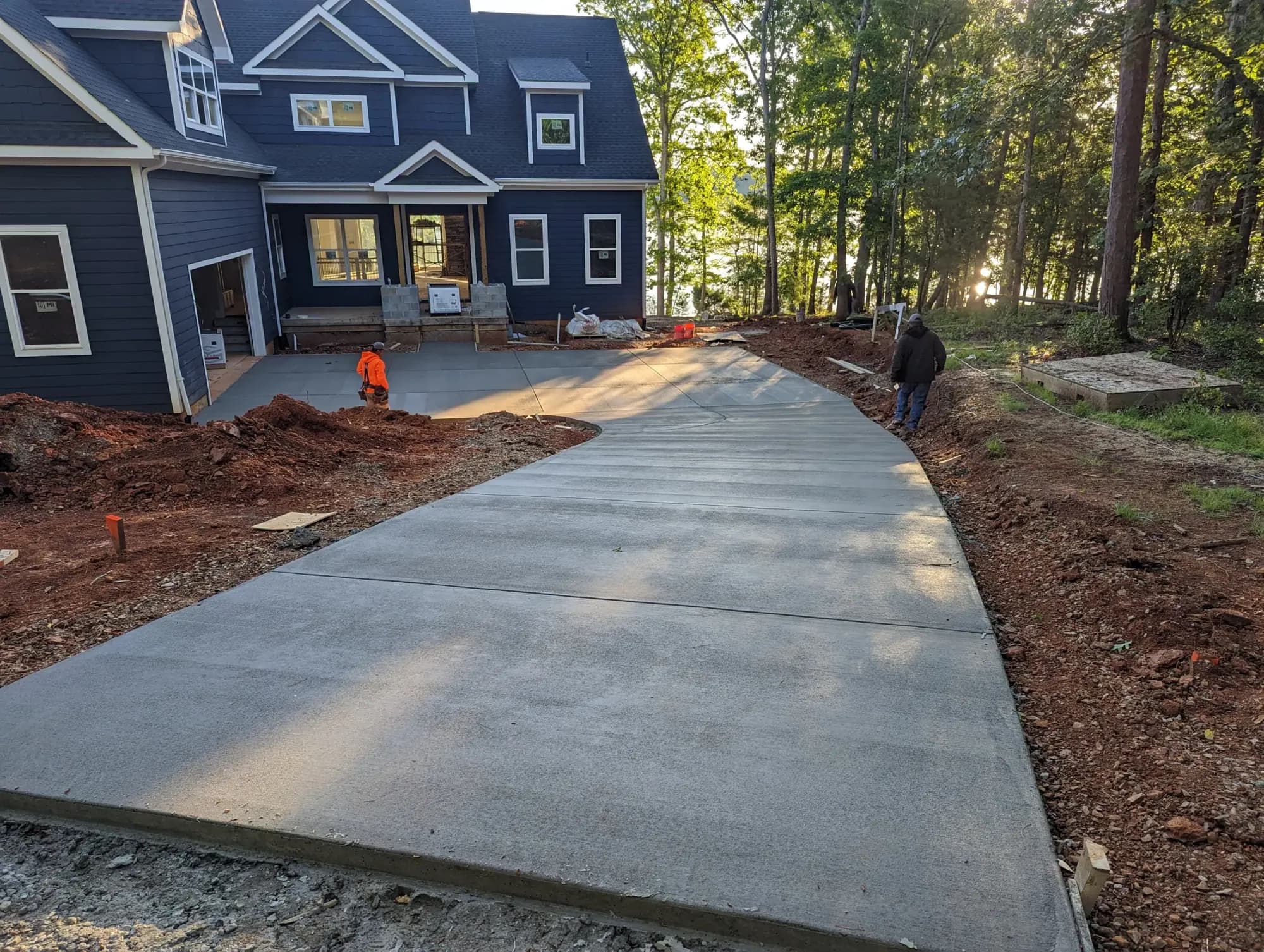
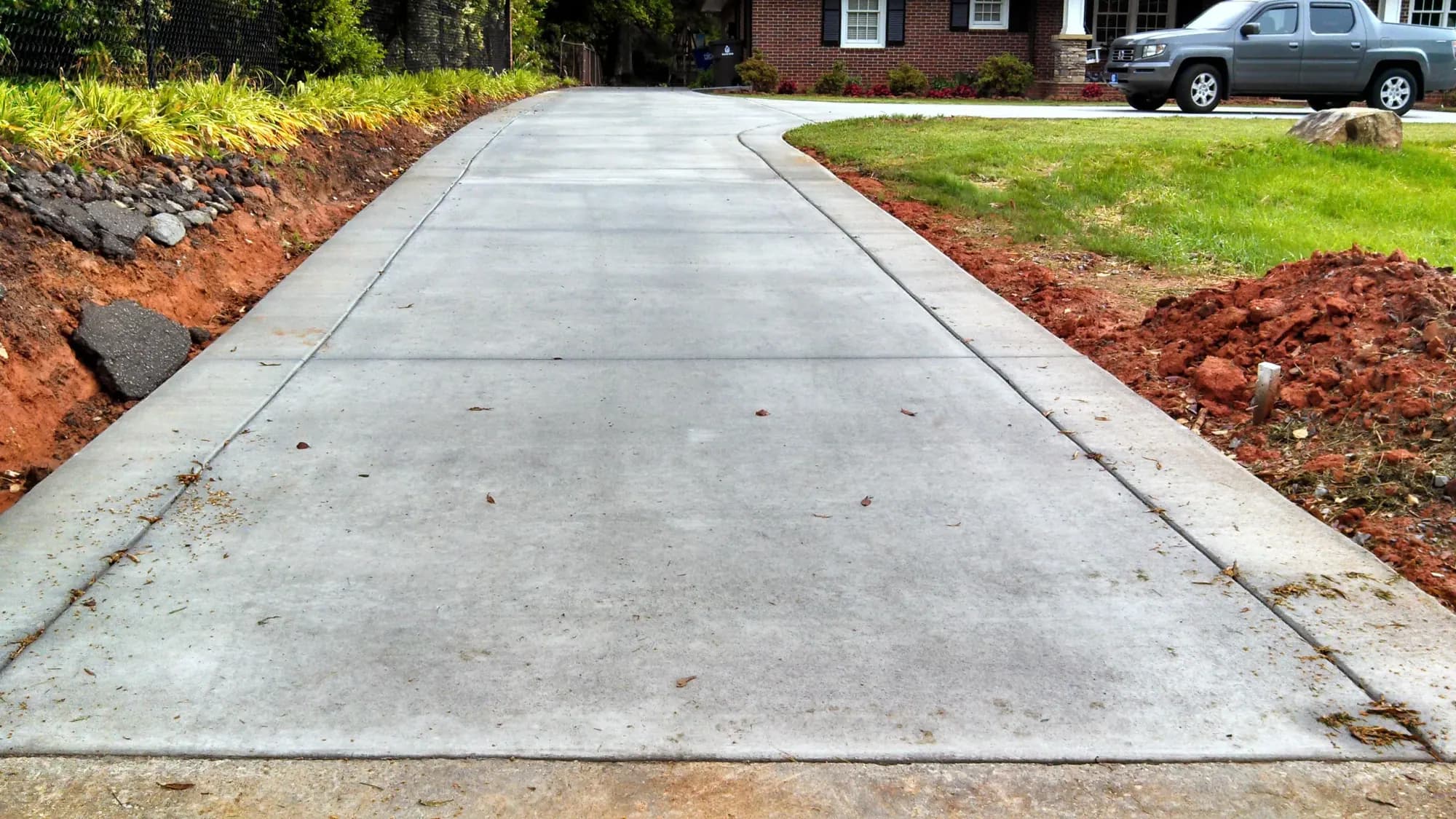
Before and after
See the difference a completed driveway replacement project makes.
 Before
 After
AfterBroom Finish, Flared Apron / 4000 PSI fiber concrete / drag to compare
Common questions
Straight answers before you request an estimate.
- How long before I can drive on a new concrete driveway?
- Stay off it with vehicles for about 7 days. Concrete keeps gaining strength for roughly a month, but a week of cure is the practical rule for parking on a residential driveway. Walking on it is fine after about three days.
- How thick should a concrete driveway be?
- Four inches of 4000 PSI fiber-mesh concrete is the residential standard and handles cars and pickups. If you park heavy equipment, campers, or trucks, going thicker costs roughly 20% more and adds about 50% more load capacity — we'll tell you honestly whether your driveway needs it.
- Will my new driveway crack?
- All concrete cracks eventually — anyone who promises otherwise is selling you something. The job is controlling where it cracks: proper base compaction, fiber-mesh reinforcement through the mix, and control joints cut in the right places so movement happens at the joint, not across your slab.
- What is a concrete densifier, and do I need one?
- A densifier is an optional penetrating treatment that helps reduce porosity and increase the treated surface's hardness and abrasion resistance. It is a surface treatment, not a repair for structural deficiencies, large cracks, or substrate problems. A properly poured and cured 4000 PSI slab stands on its own; we'll quote the densifier as an option so you can decide.
Need more information? Read the full concrete FAQ for cure times, thickness, weather, maintenance, and cracking.
The estimate